Introduction
In this projet you will create a simulation of cloth. The cloth will be just a subdivided plane.
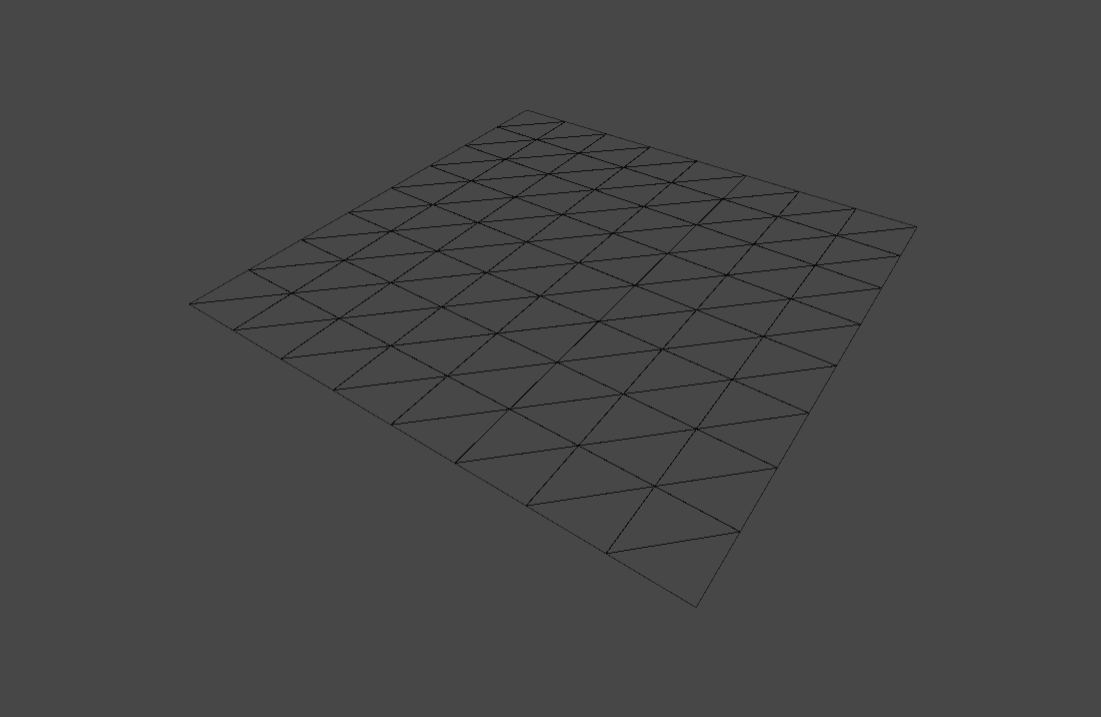
You will use a Compute Shader to update the positions and velocities of the vertices of the cloth. Your simulation will have to detect collisions between the cloth and a sphere and make the cloth react in a realistic way.
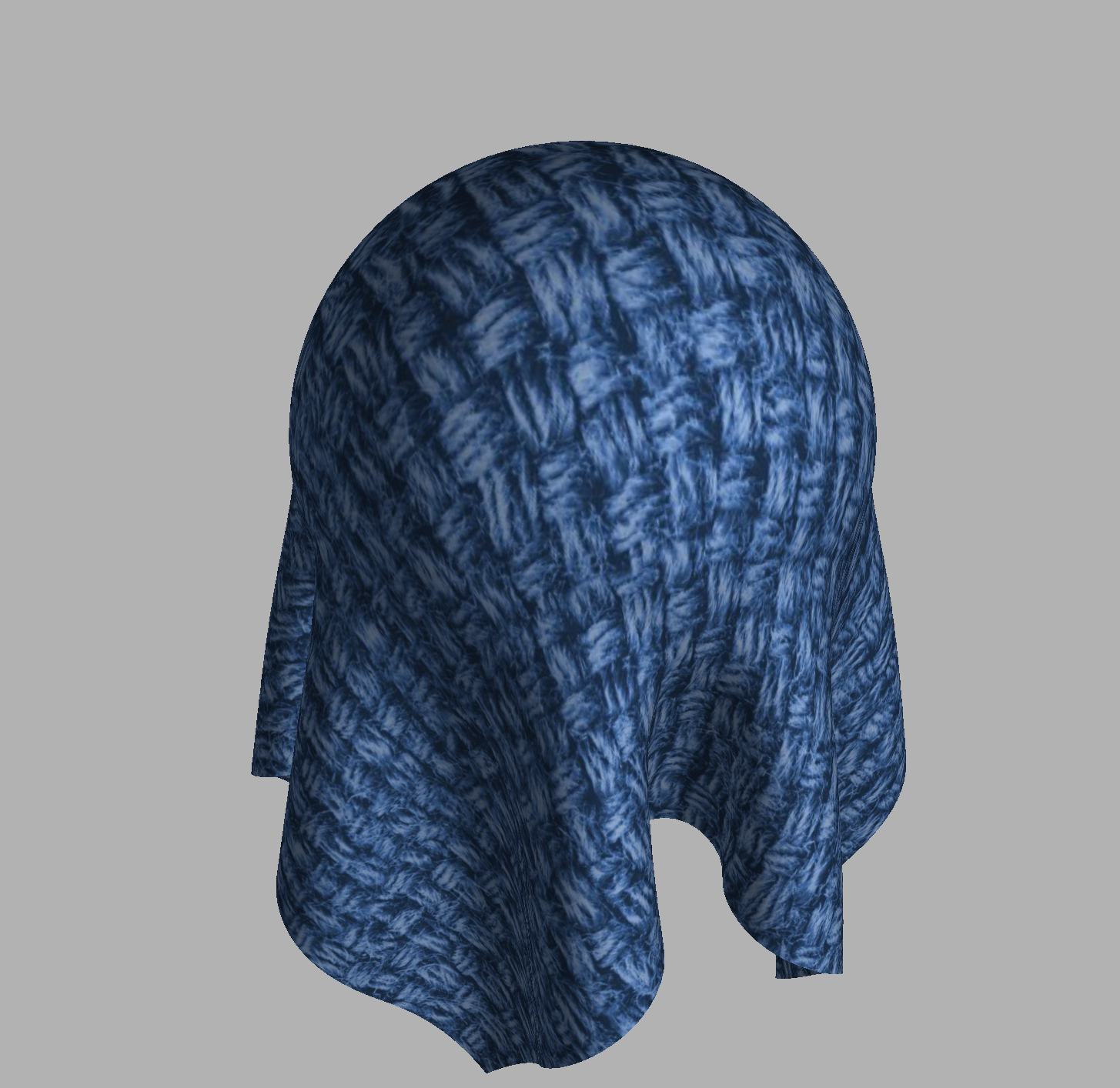
The cloth geometry and the springs connectivity will be generated on the CPU. The simulation must run on the GPU with a Compute Shader. Simulations parameters must come from the CPU code via Bind Groups.
The project will have to be defended during the oral exam in January.

 and
and
 are respectively the positions in the current frame and in the previous
frame. Idem for
are respectively the positions in the current frame and in the previous
frame. Idem for
 and
and
 that are velocities.
 is the resultant of the forces and
 the mass.
 is the time step. If we want a stable simulation we will need to compute
multiple time steps between each frame. What are the
forces that apply in a simulation of a cloth? To make a simple
simulation, we consider that the different vertices of the cloth are
connected by springs. The forces are easily calculated using Hooke’s
law.
is the time step. If we want a stable simulation we will need to compute
multiple time steps between each frame. What are the
forces that apply in a simulation of a cloth? To make a simple
simulation, we consider that the different vertices of the cloth are
connected by springs. The forces are easily calculated using Hooke’s
law.

 is the spring stiffness constant and
 the difference in length compared to the length of the spring at rest.
the
the difference in length compared to the length of the spring at rest.
the
 sign is there to remind us that the force opposes the length variation
and therefore acts to bring the spring back to its rest length.
sign is there to remind us that the force opposes the length variation
and therefore acts to bring the spring back to its rest length.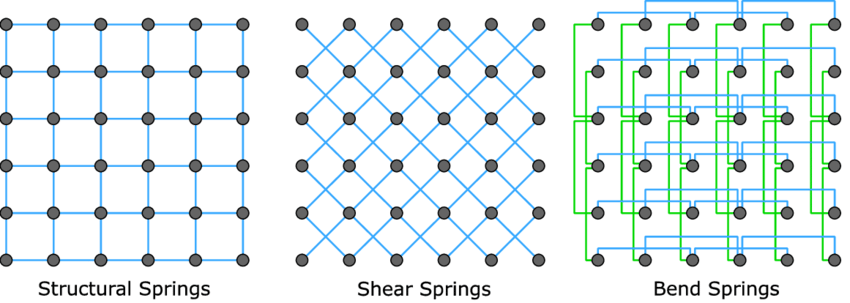

 is the damping coefficient.

 is the penetration depth and
 the stiffness of collisions.
 is the resultant of the other forces.
 et
et
 are its tangential and normal components.
 is the unit vector normal to the surface.
 is the unit vector tangent to the surface in the same direction as
 is the coefficient of friction. In short, the frictional force cancels
out the tangential component of the other forces up to a certain point
which depends on the normal component.
is the coefficient of friction. In short, the frictional force cancels
out the tangential component of the other forces up to a certain point
which depends on the normal component.